

What Are Vintage Clothes?
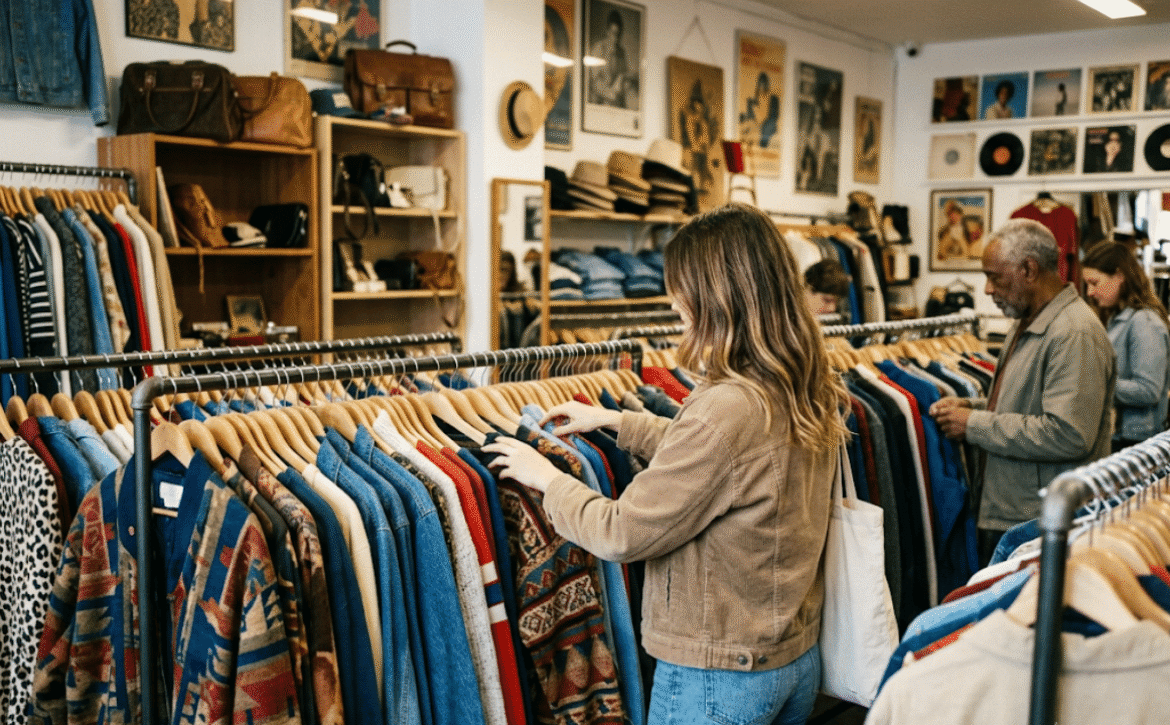
Whenever you walk into a thrift store, you’re likely to see the word “vintage” plastered all over the place, but what does it actually mean? It’s confusing because store owners will use the term to describe all sorts of different clothes, anything from sweatshirts from the early 2000s to dresses from the 1950s.
A simple rule of thumb is that “vintage” refers to anything that’s more than 20 years old. But don’t confuse it with “antique,” “retro,” or just “secondhand.” Those have different meanings.
In this guide, we’re going to try to explain what makes a piece of clothing vintage. We’ll discuss how old it needs to be and what “vintage” usually means compared to those other labels. This way, you’ll have more of the background information you need to check a garment’s age when shopping.
What are vintage clothes?
Vintage clothes generally refer to garments made more than 20 years ago. As such, the definition of what counts as vintage is expanding with every passing year.
For example, vintage encompasses Levi’s jeans from the 1980s, trench coats from the 1960s, and even anoraks from the 1990s. Items don’t have to look old to be classified as vintage: they just need to have been made several decades ago.
For this reason, many people consider age the main test for something being vintage. As with wine, however, the term vintage needs to say something about the period. Plenty of generic clothes were made between 1950 and 2005, but not all of them deserve the vintage moniker.
Usually, vintage suggests that there was something particular about the cut or style that was relevant to the era. For example, let’s say a thrift store is selling a plain white T-shirt manufactured in 2004. This item might be old, but nobody would call it genuine vintage. Meanwhile, a tour shirt from a band that was popular during that same year could reasonably be called vintage, or at least have a better claim to the title.
Condition is also important for vintage clothes. Most show minor signs of wear and tear, but the original garment is mostly intact. The most sought-after vintage clothing isn’t necessarily collectible or historical, but simply clothing that’s wearable and has some life left in it.
Ultimately, though, the reality is that any clothing store can use the word “vintage” however it wants. There’s no legal requirement for clothing to be a certain number of years old or of a particular quality. It’s not an official term in the clothing industry, even though brands use it regularly. Governments do not certify apparel as vintage. As such, always bear in mind that it’s a relatively loose term without strict definitions.
How old does clothing have to be to count as vintage?
Most sources say that clothing has to be 20 years old to count as vintage. This standard is imposed by many resellers and online marketplaces, including Etsy.
This means that clothing made before the mid-2000s is widely classified as vintage.
Something that might surprise you: many people are shocked to realize that they grew up during a vintage era. The word “vintage” often conjures up images of old blouses in grandparents’ closets, but that doesn’t align with today’s broader definition.
Even so, agreement on the specifics of what makes something vintage isn’t universal. Many sellers and collectors insist that vintage pieces must be at least 25 or 30 years old, contrasting them with “modern vintage” or “Y2K vintage”, which refer to classic items from the early to mid-2000s that don’t quite qualify as true vintage in the eyes of some resellers and collectors.
You will also sometimes see vendors splitting vintage clothing into various eras, beginning with mid-century, then the 1970s, the 1980s, the 1990s, and so on. Classifying into these periods makes sense because because of how different vintage clothing construction was in each era.
Vintage versus antique clothing
Most people don’t wear “antique” clothes, but garments in this category are generally classified as being more than 100 years old.
The reason for the 100-year cutoff comes from the wider world of antiques. U.S. customs rules, for instance, define any goods entering the country over 100 years old as antiques, including clothes.
Ultimately, this means that any garments you find made before the mid- to late 1920s are antiques. Popular items in this category include Edwardian lace, Victorian brocade blouses, and beaded dresses.
Be careful, though, if you go ahead and buy one of these pieces. They can be fragile. None of them are made from modern synthetic materials, and they can split or break easily.
Generally speaking, people don’t wear antique clothing every day. They prefer to collect or display them, or perhaps wear them for special occasions.
Many museums keep antique clothing but have to store it in specialized facilities away from moisture and strong light. This contrasts with vintage clothing, which is generally still wearable, may contain robust synthetic fibers, and can go straight into a weekly wardrobe rotation.
Ultimately, there are two main differences between vintage and antique clothing:
- Vintage clothing is not as old.
- It doesn’t require you to handle it with as much care.
Vintage versus retro clothing
While the difference between vintage and antique clothing might be obvious to most people, the contrast with retro clothing isn’t so clear-cut. Unfortunately, retro clothing can literally look the same as vintage clothing, but the key difference is when it was made.
Generally speaking, retro clothing is modern clothing that’s been designed to look like vintage items. For example, a modern clothes manufacturer might create a full skirt dress designed to look like something straight out of the 1950s. These pieces borrow their style from the earlier era, but they don’t pretend to be old.
By contrast, vintage clothing is actually made in the era it represents. For example, a vintage polka dot dress from 1962 was made in 1962.
Sometimes manufacturers don’t use the word “retro.” Instead, they’ll use terms like “vintage-inspired” or “vintage vibe.” These just mean that it’s designed to look like a vintage piece of clothing, but isn’t really.
Vintage versus secondhand clothing
Finally, vintage and secondhand clothing are overlapping categories. Secondhand clothing just refers to any garment that somebody else bought and then resold. It could be a sweater they bought off Shein last week or a turtleneck from Walmart 10 years ago. It doesn’t matter. Vintage, on the other hand, is almost always secondhand as well, but it is also more than 20 years old.
The word “pre-owned” usually means the same as “secondhand.” Pre-owned vintage is therefore also something of a tautology, or so it might seem.
There is, however, an exception where vintage isn’t secondhand. Sometimes vintage comes from dead stock: old clothing that was never sold or worn. This happens more than you might think. Historically, manufacturers sometimes produced too much, leading to overstock that never got sold and just sat in a warehouse somewhere. If you’re really interested in vintage clothing that looks and feels brand new, then this is what you want.
How to tell if a piece of clothing is actually vintage
It’s worth knowing that sellers don’t always label clothing with 100% accuracy. They may label a piece of apparel vintage, even if it fails to meet the loose definitions above.
What should you do? The best place to start is with the label on the clothing. Manufacturers printed these differently in the past, and it’s often easy to tell whether an item is more than 20 years old. Brands updated their tags over the years, and denim clothing is a good example of this in practice. We detail this more in our guide on how to read vintage Levi’s tags by year. This piece gives you all of the juicy details on how one of the world’s most famous brands changed its labeling over time.
Next, you’ll want to look at the care label. In the United States, care labels with washing instructions were mandated in the 1970s, so if yours doesn’t have one, it could be older than that. Check that the label hasn’t been cut out.
After that, check the construction. Older clothing often features more hand finishes, so you may notice some irregularities in the seams that you don’t get on modern clothing.
Lastly, look at the fabric. Some material blends were simply not available in times gone by, and others were more common. For example, heavy polyester was a big hit during the 1970s.
You can learn more about what to look out for in our list of the most popular vintage clothing brands.
How to find vintage at your local thrift store
In summary, you can find vintage clothing at your local thrift store by looking for items that are more than 20 years old but not antique. Be careful of other labels like “retro” or “secondhand,” which mean different things.
Generally speaking, thrift stores are a great place to find vintage clothes and other older pieces alongside secondhand clothing. You never know what people are going to donate from one week to the next.