
How to Buy Thrift Clothes in Bulk
Buying second-hand clothing one piece at a time can be rewarding, but it is not always practical. Whether you are starting a resale business, stocking a vintage shop, running a market stall, or simply looking for affordable clothing in larger quantities, buying thrift clothes in bulk can offer significant advantages.
Bulk purchasing means you are ultimately going to be paying less per item, you can build a wider range of inventory, and have access to clothing that may never reach traditional thrift store shelves. It can also be an effective way to source unique pieces that stand out in a crowded resale market.
The challenge is knowing where to buy, what to look for, and how to avoid costly mistakes. Understanding how to buy thrift clothes in bulk can help you make better purchasing decisions and get the most value from every order.
Why Buy Thrift Clothes in Bulk?
Most people begin their second-hand journey by shopping in local thrift stores. While this can be a great way to find individual pieces, it becomes difficult when you need larger quantities of inventory.
Buying in bulk allows you to get hundreds or even thousands of garments at a lower average cost per item. This can be very useful for online clothing resellers, vintage clothing businesses, market traders, costume departments, charity fundraisers, and personal shoppers seeking affordable wardrobes.
Bulk buying also helps by saving time.
Rather than having to visit multiple places or buy from multiple sellers online, buyers can source larger quantities from a single supplier. For many retail businesses, buying in bulk is often the only practical way to maintain a consistent flow of inventory.
A steady supply matters when you are selling online or in person. Customers expect to see fresh stock, and resale businesses need enough variety to be able to properly test what sells. Buying thrift clothes in bulk gives you more room to experiment with categories, styles, brands, and price points.
Understanding the Different Types of Bulk Clothing
Not all bulk clothing is sold in the same way.
Before purchasing, it helps to understand the common types of bulk bundles you can often find.
Mixed clothing bundles contain a variety of garments, sizes, brands, and styles. These lots are often sold by weight and can include everything from t-shirts and jeans to jackets, dresses, knitwear, and accessories.
Mixed lots tend to be more affordable, but they require additional sorting. Some items may be ready to sell immediately, while others may need cleaning, repair, or donation.
Sorted clothing has already been grouped into categories. Some suppliers pre-sort inventory into men’s clothing, women’s clothing, children’s clothing, sportswear, denim, vintage clothing, branded clothing, or seasonal stock.
Sorted inventory usually costs more because the supplier has already completed part o the work. The benefit is that buyers have a clearer idea of what they are receiving before the order arrives.
Premium or branded clothing bundles focus on recognized labels or higher-value items. These lots typically command higher prices, but they may offer stronger resale potential if the supplier’s grading is reliable.
Buying From Rag Houses
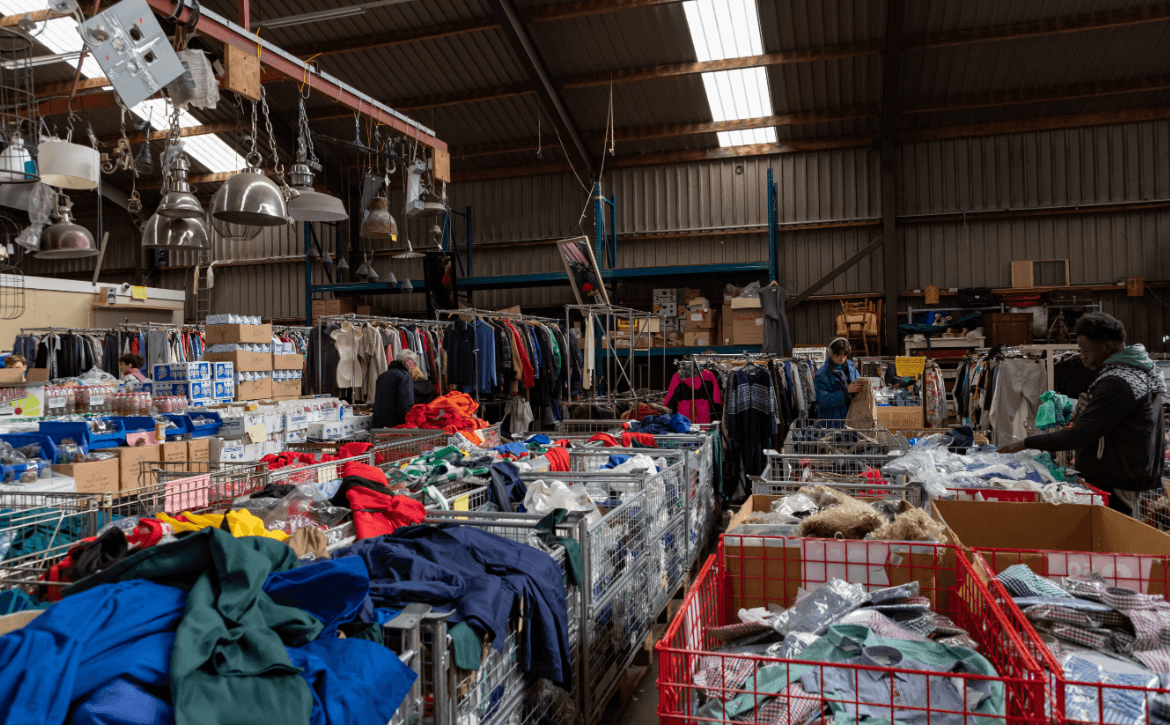
One of the most common methods for sourcing bulk second-hand clothing is through rag houses. A rag house is a facility that collects, sorts, and processes large volumes of donated clothing.
Most rag houses receive clothing from a mix of sources, including charities, donation bins, recycling schemes, and clothing collection services. Large volumes of garments arrive every day, so items are sorted before being sold on to buyers.
Items may be separated into vintage stock, export-grade clothing, recycling material, branded apparel, seasonal items, or general mixed clothing. This sorting process allows buyers to choose inventory that matches their needs more closely.
Rag houses are popular with experienced resellers because they provide access to clothing before it reaches retail thrift stores.
Working With Wholesale Clothing Suppliers
Wholesale clothing suppliers are another common source of bulk thrift clothing. Unlike rag houses, wholesalers usually buy and process inventory before reselling it to retailers, resellers, and small businesses.
Many wholesalers offer smaller minimum orders, online ordering, detailed inventory descriptions, graded clothing categories, and a more consistent supply. This can make them easier for newer buyers to work with.
For example, a wholesaler may offer a forty-pound box of mixed women’s clothing, a branded sweatshirt bundle, a vintage denim lot, or a pallet of seasonal jackets. These clearly defined options make planning easier.
The trade-off is price. Wholesale inventory usually costs more than buying directly from a rag house or donation source because the supplier has already done some of the sorting and handling.
When comparing suppliers, pay close attention to minimum order requirements, shipping costs, return policies, clothing grades, and customer reviews. A slightly higher purchase price may be worthwhile if it results in cleaner, better sorted, and more saleable inventory.
Good wholesalers should be clear about what buyers can expect. Vague descriptions, unclear grading, and limited communication are warning signs, especially when placing a first order.
Sourcing Inventory Through Auctions
Clothing auctions provide another route for buying thrift clothes in bulk. Many charities, liquidation companies, storage facilities, estate clearance firms, and commercial sellers auction large lots of second-hand clothing.
Auction inventory can range from small local clothing lots to pallets or truckloads of apparel. Some lots are mixed and unsorted, while others may be grouped by category or source.
The main appeal of auctions is price. Buyers may be able to secure large quantities of clothing at a competitive rate, especially if there are few other bidders. The biggest risk with auctions is that you may have limited information.
Buying Directly From Donation Centers
Some donation centers and charities sell excess inventory in bulk. Not every donated item reaches the retail floor, so this is your chance to directly buy from the donation center at potentially lower prices. Stores often receive far more clothing than they can display, especially during busy donation periods.
Excess inventory may be sold by weight to recyclers, exporters, wholesalers, or approved bulk buyers. In some cases, local resale businesses may be able to arrange direct purchasing relationships with donation centers.
Buying directly from donation centers can sometimes provide access to inventory at lower prices than traditional wholesale channels. It may also help local organizations move stock efficiently while supporting their wider work. You should bear in mind that availability can vary by location, and building relationships is important.
How Bulk Clothing Is Sold By Weight
Many bulk clothing suppliers sell inventory by weight rather than by individual item. Buyers may purchase clothing by the pound, kilogram, bale, box, pallet, or truckload, depending on the supplier.
This system allows suppliers to process large quantities quickly. Instead of counting garments ever, clothing is grouped into larger units that can be priced, moved, and shipped more efficiently.
The number of items you receive depends on what is inside the lot. A fifty-pound box of t-shirts will contain more individual garments than a fifty-pound box of winter coats or denim jeans.
When comparing suppliers, RS asks what the advertised weight includes. Some lots may include accessories, damaged items, or lower-grade garments. Others may be more tightly sorted.
For new buyers, smaller weight-based orders are often the safest starting point. They provide a chance to understand the supplier’s quality before committing to larger quantities.
Common Mistakes New Buyers Make
Many first-time buyers make similar mistakes when learning how to buy thrift clothes in bulk. One of the most common is buying too much too soon.
A large order may look appealing because the price per item is lower, but it can quickly become overwhelming. Clothing needs to be sorted, cleaned, stored, photographed, priced, listed, and sold.
Another mistake is focusing only on quantity. A thousand low-value garments are not always more useful than one hundred well-chosen pieces with stronger resale potential.
Some buyers also overlook storage. Bulk clothing takes up more room than expected, especially when dealing with coats, denim, shoes, or mixed pallets.
The best approach is to start with manageable quantities, track results carefully, and learn which categories produce the strongest returns.
How Bulk Buyers Maximize Value
Experienced buyers often maximize value by specializing rather than trying to sell everything. Common niches include vintage clothing, workwear, sportswear, denim, designer labels, streetwear, children’s clothing, or plus-size fashion.
Specialization helps buyers recognize quality quickly. Someone who understands vintage denim, for example, can spot valuable cuts, washes, labels, and details that another buyer may overlook.
A focused niche also makes pricing, listing, and marketing easier. Instead of managing a random mix of clothing, buyers can build a clear identity around the categories they know best.
Good sorting systems also help. Separating items by quality, season, size, brand, and resale channel can make bulk inventory easier to manage.
Is Buying Thrift Clothes in Bulk Worth It?
For the right buyer, purchasing thrift clothes in bulk can provide access to affordable inventory and strong resale opportunities. The key is understanding where to source inventory, how suppliers operate, and what level of quality to expect.
Rag houses, wholesalers, auctions, and donation centers each offer different advantages. The best option depends on your budget, experience level, storage space, and goals.
Learning how to buy thrift clothes in bulk takes time. Early orders may involve trial and error, especially when testing suppliers or unfamiliar clothing categories.
Buyers who focus on supplier relationships, inventory quality, realistic costs, and careful sorting are usually better positioned for long-term success.
Whether you are building a resale business or simply looking for larger quantities of affordable clothing, buying in bulk can open the door to opportunities that traditional thrift store shopping cannot provide.