

How To Tell If Thrift Clothes Are Worth Saving
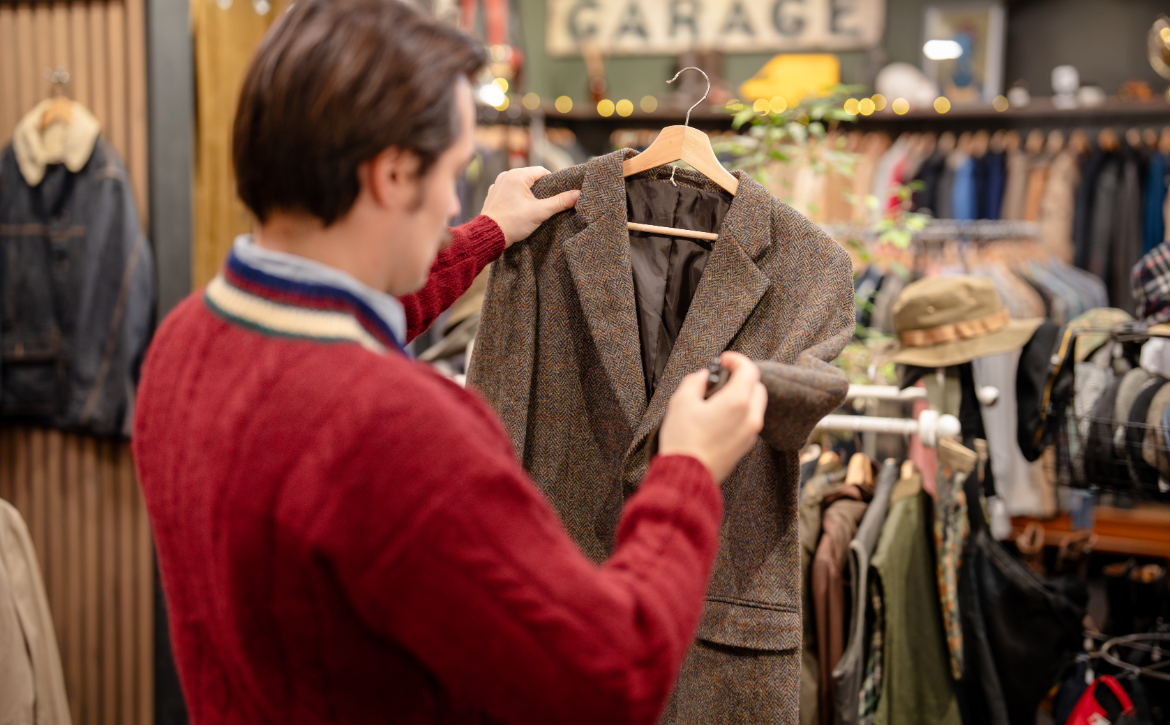
Anyone who spends any time in thrift stores eventually runs into the same questions – you find something interesting, maybe even exciting, but then you hesitate because you’re not sure whether it’s actually a good find or just something that looks pretty promising on the hanger…
That’s the tricky part of thrifting because not everything deserves to come home with you, and sometimes the difference between a great piece and a mistake isn’t all that obvious at first glance.
Learning how to tell if thrift clothes are worth saving takes a bit of practice, but once you know what to look for, it becomes a lot easier to sort through racks quickly and focus on the items that are genuinely worth keeping.
Start With The Fabric
Fabric is usually the first clue because some materials just age better than others, and that means they’re far more likely to survive years or wear and still look good. Natural fibers like cotton, wool, linen, and denim tend to hold up really well, and that can usually be nicely refreshed with proper washing or some light repairs.
On the other hand, very thin synthetic fabrics can sometimes show wear more quickly. They might stretch out of shape, pill heavily, or perhaps they’ll lose their structure if they’re once more than a few times. That doesn’t mean they’re necessarily bad finds, but it does mean you should check them more carefully.
When you’re thinking about how to tell if thrift clothes are worth saving, fabric quality can usually give you an early hint about whether the item still has any life left in it.
Look Closely At The Seams
Construction is actually probably just as important as the material, so when you find something you like, turn the garment slightly and take a good look at the seams – are they straight and secure? Do the stitches look strong or are they loose and falling apart?
Well-made clothes usually have neat seams and reinforced areas around what are known as the stress points like shoulders and underarms, so if those areas still look good, the item probably has a lot of wear left in it.
Loose threads or slightly open seams aren’t always a problem, of course, and in fact, they’re often easy fixes, but large areas where the stitching has completely come away might need more repair work than the garment is worth.
Understanding how to tell if thrift clothes are worth saving can often come down to recognizing the difference between quick and easy repairs and real structural damage.
Check For Stains Carefully
Stains can be pretty tricky because some look worse than they really are, and others seem small but they turn out to be permanent. If you spot a mark, look closely at its color and location – oil stains, ink, and bleach marks are going to be hard to remove completely, but food and dirt stains might wash out with the right treatment.
It’s also worth considering where the stain is. A small mark near the hem might be easy to hide or trim out, but one in the center of the chest could be harder to deal with.
Part of learning how to tell if thrift clothes are worth saving means developing a bit of a sense of which imperfections are manageable and which ones just need to be avoided completely.
Consider The Possibility Of Repairs
Not every thrifted item needs to be perfect, and in fact a lot of great finds do need a little bit of work to bring them back up to scratch. You could find things with missing buttons, loose hems, or maybe a minor issue with a seam, and those are pretty simple fixes – people who are comfortable with basic sewing might even see them as opportunities rather than problems, especially because the things with slight issues will usually cost less to buy.
More complicated repairs, like replacing zippers or reshaping garments, for example, might need a bit more time and skill, and unless you know you can make the repairs or you know someone who could help, it’s often best to pass those ones by.
Knowing how to tell if thrift clothes are worth saving often includes thinking realistically about the repairs you’re willing to make.
Look At The Overall Shape
Even if the fabric and seams are in good condition, the garment should still have its original shape – if a shirt looks permanently stretched, or a sweater hangs unevenly, it might not sit properly when you’ve got it on, and then you just won’t wear it.
Clothes that have lost their structure are usually harder to fix, and although washing or steaming might help a little, it won’t always give you back the original fit. That’s why checking the overall silhouette is another useful step in learning how to tell if thrift clothes are worth saving.
Think About Longevity
Finally, think about whether the piece is something you’d realistically wear for a while because a good thrift find isn’t just about the price or brand – it’s about how much use you’ll get out of it.
If the item is durable, fits well, and suits your style, it’s much more likely to become a regular part of your wardrobe, and those are the pieces that make thrifting worthwhile.
In the end, the goal isn’t to collect as many items as you can (although that might be how it seems at first, until you get the hang of it), and instead it’s to choose carefully so that what you bring home can still serve its purpose – and you enjoy it too.
Final Thoughts
Thrifting can feel unpredictable at first, but learning how to tell if thrift clothes are worth saving makes the process a lot easier and more enjoyable. With practice, knowing what to look for becomes second nature, and when it does, going to a thrift store means discovering clothes that still have plenty of life left in them.